The Ultimate Guide to Interior Painting
Everything you need to know to transform your home’s interior, from prep to finish.
Introduction
Painting a room is the most popular DIY project in the world. It’s relatively cheap, it makes a huge impact, and almost anyone can do it.
But there is a big difference between “putting paint on a wall” and achieving a professional, durable finish.
We’ve compiled our decades of experience into this ultimate guide to help you paint like a pro.
Choosing a Forgiving Color
If you are a beginner, avoiding dark colors or bright whites can make your life easier. These shades tend to show roller marks more easily.
- Novice-Friendly Picks: Accessible Beige SW 7036 or Alabaster SW 7008. These colors have great coverage and hide minor imperfections.
Phase 1: The Prep (Do Not Skip This)
If you take one thing away from this guide, let it be this: Painting is 80% prep and 20% painting.
- Clean the Walls: Paint doesn’t stick to dust or grease. Wash your walls with TSP (Trisodium Phosphate) or warm soapy water.
- Fill the Holes: Use spackle for small nail holes and joint compound for larger dents. Sand them smooth once dry.
- Tape Carefully: Use high-quality painter’s tape (like FrogTape) to protect trim. Press the edges down firmly with a putty knife to prevent bleed-through.
Phase 2: The Tools
You cannot do a good job with bad tools.
- Brushes: Buy an angled sash brush (2.5 inch) for cutting in. Look for nylon/polyester blends.
- Rollers: Use a 3/8-inch nap for smooth walls and a 1/2-inch nap for textured walls.
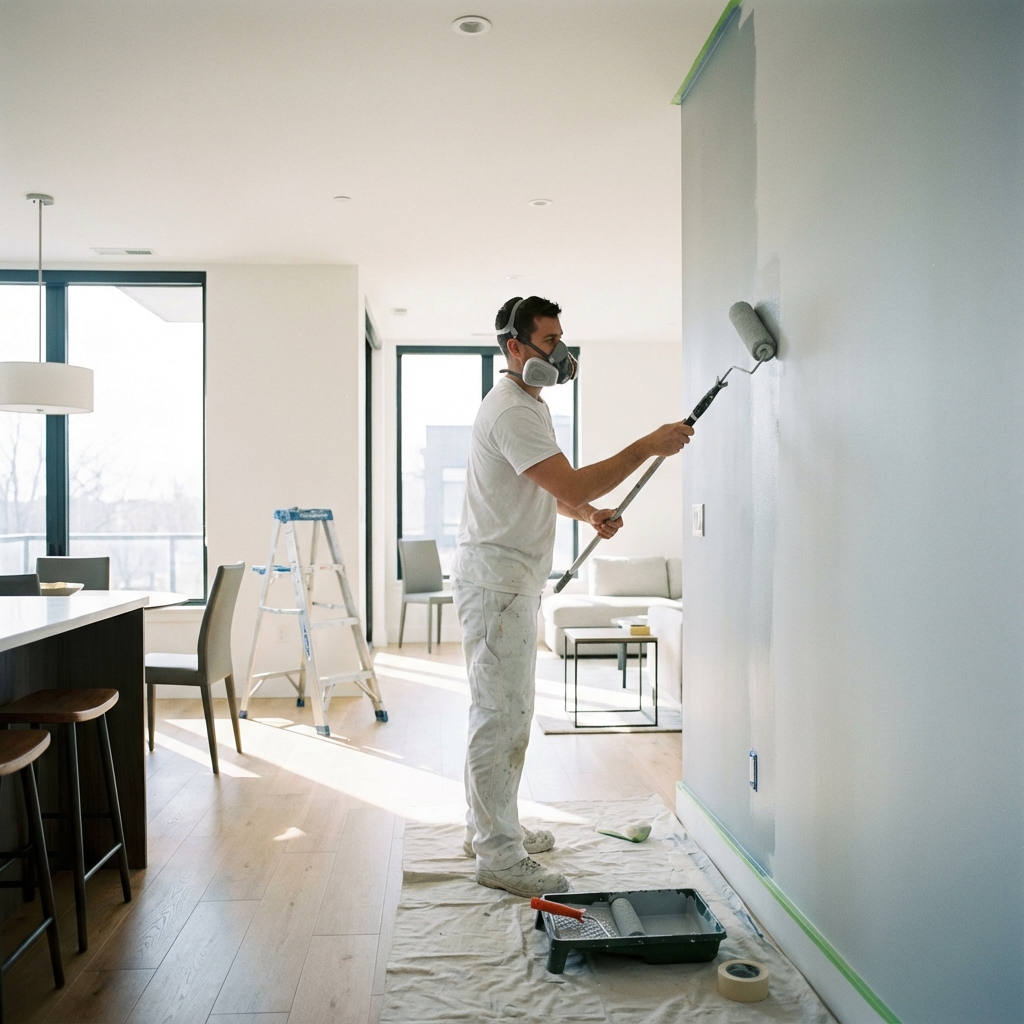
- Extension Pole: Save your back. Screw a pole into your roller handle.
Phase 3: The Technique
- Cut in First: Paint a 3-inch border around the ceiling, baseboards, and corners with your brush.
- Roll While Wet: Try to start rolling before the “cut in” border dries. This prevents “picture framing” (where you can see a visible border around the room).
- The “W” Method: Load your roller and paint a large “W” on the wall. Then fill it in. This distributes the paint evenly.
- Two Coats: Always. The first coat provides coverage; the second coat provides the true color and sheen.
Conclusion
Painting is a skill that improves with practice. Take your time, buy good tools, and don’t rush the prep.
Overwhelmed by the scale of the project? Canvas Home Painting can paint your entire home in a fraction of the time it would take to DIY.
Get a free quote today.